The Middleman Always Wins - Unless You Change the Rules
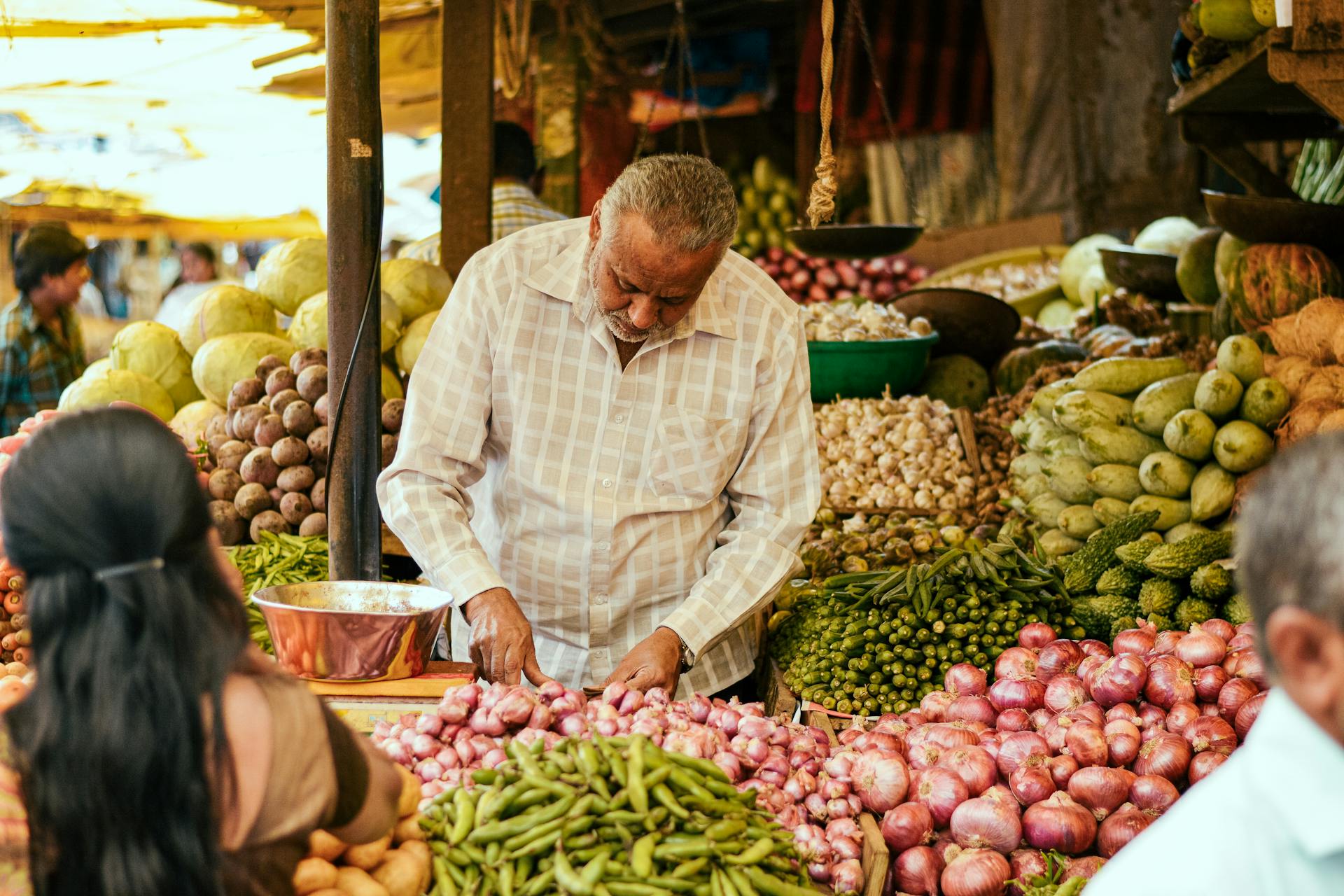
Ravi has been growing tomatoes outside Tumakuru for eleven years. He knows his soil, he knows his crop, and by April he knows roughly what he'll harvest. What he doesn't know - what he has never known - is what his tomatoes are actually worth by the time they reach a restaurant kitchen in Bengaluru. That number belongs to someone else.
That someone else is the system. And in Karnataka, that system has a name: the APMC.
What the APMC Was Supposed to Be
The Agricultural Produce Market Committee wasn't created to hurt farmers. That's worth saying clearly, because the story gets complicated fast and it's easy to lose sight of the original intention.
When APMC laws spread across Indian states in the 1960s and 70s, they were a genuine attempt at protection. Small farmers were being exploited - selling to whoever showed up at the farm gate, with no price information, no alternatives, and no power to negotiate. The mandi was meant to fix that. Bring everyone into one regulated place, create competition among buyers, post the prices publicly, and suddenly the farmer has options.
For a while, in many places, it worked. Mandis created real price discovery. They gave farmers a venue, a weighing station they could trust, and a crowd of buyers competing for their produce instead of one trader with a take-it-or-leave-it offer at the farm.
But regulated systems attract people who are good at working regulated systems. And over decades, that's exactly what happened.
How a Protection Became a Trap
The mandi didn't become extractive overnight. It happened gradually, through the accumulation of small advantages by people who were simply better positioned to take them.
Commission agents - arthiyas - were always part of the design. Someone needed to broker deals, extend credit to farmers who couldn't wait for payment, and manage the paperwork. That role is real and the service is genuine. A small farmer arriving at 4am with a truckload of perishable tomatoes and no established buyer relationships genuinely needs someone in their corner.
The problem is what that corner started to cost.
Arthiyas charge commission - typically between 2 and 8 percent - on every transaction. On top of that, licensed traders in the mandi pay fees to operate. Market committees collect levies. Each layer made sense individually, as a fee for a service. But stacked together, across a chain of two or three intermediaries between farmer and final buyer, those percentages add up to something that starts to look less like a service fee and more like a toll on survival.
And crucially: the arthiya knows things the farmer doesn't. He knows what the buyer paid yesterday. He knows which traders are flush and which are stretched. He knows the real demand in Bengaluru this week, not last week. The farmer knows his harvest. That information gap - not greed, not malice, just structural advantage - is where the value quietly moves from one pocket to another.
By the time the reforms arrived, many mandis had drifted a long way from their original purpose. The farmer was still nominally protected. But protected inside a system that had learned, over decades, to skim efficiently.
The Brief Moment the Rules Changed
In 2020, the BJP government passed farm reform legislation that, among other things, allowed Karnataka farmers to sell outside the APMC system entirely. You could sell directly to a retailer, a restaurant, an aggregator, or a platform - without routing through the mandi, without paying the cess, without needing a licensed trader as your intermediary.
For farmers who had better information and established relationships, this was genuinely liberating. A few cooperatives moved quickly. Some direct supply arrangements that had been technically illegal became legal overnight. The idea that a farmer could negotiate directly with a buyer - knowing both sides of the price - suddenly had legal backing.
But here's the uncomfortable truth that the reform optimists underestimated: changing the rules doesn't automatically change who benefits from them.
The traders and aggregators who had spent years building relationships, logistics networks, and market knowledge adapted faster than most small farmers could. The farmer who had always sold through an arthiya still didn't have a direct line to a Bengaluru restaurant buyer. He still didn't have cold storage. He still had tomatoes ripening on a truck. The freedom was real - and largely inaccessible to the people who needed it most.
And Then They Took It Back
In 2023, the Congress government that came to power in Karnataka reversed the reforms. Farmers were back inside the APMC system. The brief window of open trade closed.
The official reasoning was farmer protection - that deregulation had exposed small farmers to exploitation by large corporate buyers who could dictate prices without the mandi's oversight. And that concern isn't invented. There are real examples of farmers who sold outside the mandi and got burned - delayed payments, disputed weights, buyers who disappeared after one season.
But sit with that reasoning for a moment, because it contains a paradox that goes to the heart of everything.
The mandi was created to protect farmers from exploitation. Decades later, farmers needed protection from the mandi. The reforms were created to free farmers from that captured system. And now farmers apparently need protection from the freedom.
What this loop actually tells us is that the problem was never really about which system - mandi or open market. It's about who has better information, more capital, and more time. In the mandi, that was the arthiya. In the open market, that was the corporate aggregator. The farmer, in both versions, is still the one arriving at 4am with perishable goods and a shrinking window to sell them.
The rules changed twice. The structural disadvantage didn't change at all.
The New Middlemen Arrive
Around the same time as the reforms, something else was happening. Digital platforms - BigBasket, Amazon, Udaan and others - had begun sourcing directly from farmers, or near-directly, operating outside APMC rules and therefore outside the cess and licensing obligations that physical traders carried.
This was framed, and in some ways genuinely functioned, as a shortcut past the mandi stack. No arthiya. No market committee levy. A farmer with a smartphone and a verified profile could theoretically reach a buyer without a single intermediary taking a cut.
The Karnataka government eventually brought these platforms under APMC licensing and cess obligations - a move that drew loud complaints from the platforms and quiet satisfaction from the mandi operators who had been watching their margins compete against unregulated digital trade.
Whether that crackdown was protectionism dressed as farmer welfare, or a genuine attempt to level a tilted playing field, depends on who you ask. What it illustrates more clearly is a pattern: every time the access rules change, the players with better infrastructure adapt first. The platforms moved fast. The regulations caught up. The small farmer was still watching from the outside.
There is one thing worth noting about the better digital platforms, though. The ones that work - that genuinely compress the margin stack rather than just rerouting it - tend to share one feature: they don't take a commission on the transaction itself. They charge for access, for trust infrastructure, for verified identity. The farmer keeps the price. That's a different model, and it points toward what actually has to change.
So Who Is the Middleman, Really?
This is where the easy narrative breaks down, and where it gets more interesting.
The arthiya is not the villain of this story. Neither is the trader, the aggregator, or the platform. Each of them performs a function that is genuinely necessary: aggregating small volumes into viable quantities, managing quality control, arranging storage, handling paperwork, extending credit, absorbing the risk of perishables. A tomato doesn't get from a farm in Tumakuru to a restaurant in Indiranagar by goodwill alone.
The problem isn't that middlemen exist. The problem is that there are too many of them, that their combined cut leaves the farmer with a fraction of the final price, and that none of them are accountable to the farmer in any meaningful way.
A system with one trusted, efficient intermediary who handles aggregation, cold chain, and payment - and charges fairly for all three - would be a better system than what most small farmers navigate today. That intermediary exists in some supply chains. In most, they don't.
What's missing isn't the removal of middlemen. It's the presence of ones worth trusting.
What Actually Has to Change
Price transparency is where it starts. Not price reform, not regulation, not a new app - just the simple, radical act of both sides of a transaction knowing what the other side knows.
When a farmer in Tumakuru can see what a Bengaluru restaurant paid for tomatoes yesterday - not a rumour, not a guess, but a real number - the negotiation changes. Not because the farmer suddenly has cold storage or a logistics network. But because the information asymmetry that has quietly transferred value for decades gets a little smaller. The arthiya's edge was never muscle. It was knowledge. And knowledge, unlike trucks and warehouses, can be distributed.
The second thing that has to change is trust infrastructure. This sounds abstract until you think about what trust actually does in a physical market. It's the reason a buyer accepts a farmer's scale without demanding a neutral weighing station. It's the reason a farmer extends credit to a restaurant buyer week after week. It's the reason a new farmer at the mandi gets worse prices than someone who has stood in the same spot for ten years - not because their tomatoes are worse, but because nobody knows them yet.
Building that trust used to take years of physical presence. Showing up, delivering what you promised, handling a dispute well when something went wrong. That process doesn't have to take years if the track record travels with you - if the farmer who has delivered reliably for three seasons somewhere carries that reputation into every new relationship, rather than starting from zero every time.
And the third thing - the one that the APMC story keeps circling without quite landing on - is that access to better options is what creates negotiating power. Not deregulation alone. Not digital platforms alone. The farmer who has three verified buyers competing for their tomatoes is in a fundamentally different position than the farmer who has one arthiya and a ripening truck. Getting to three buyers requires infrastructure, relationships, and time. But it also requires a place where those buyers can find the farmer in the first place - and trust what they find.
None of this is simple. None of it happens because a law changes or a platform launches. But the direction is clear: less opacity, more accountability, and intermediaries who earn their margin by doing something genuinely useful rather than by sitting on the only road between farmer and buyer.
Ravi, back in Tumakuru, is still growing tomatoes. The system around him has changed twice in five years and returned more or less to where it started. What hasn't changed is that someone else still knows what his tomatoes are worth by the time they reach a kitchen in Bengaluru.
That's the thing that needs to change. And it can.